INGREDIENT SCIENCE
Does Stallion Power® Actually Work? What the Ingredient Research Shows
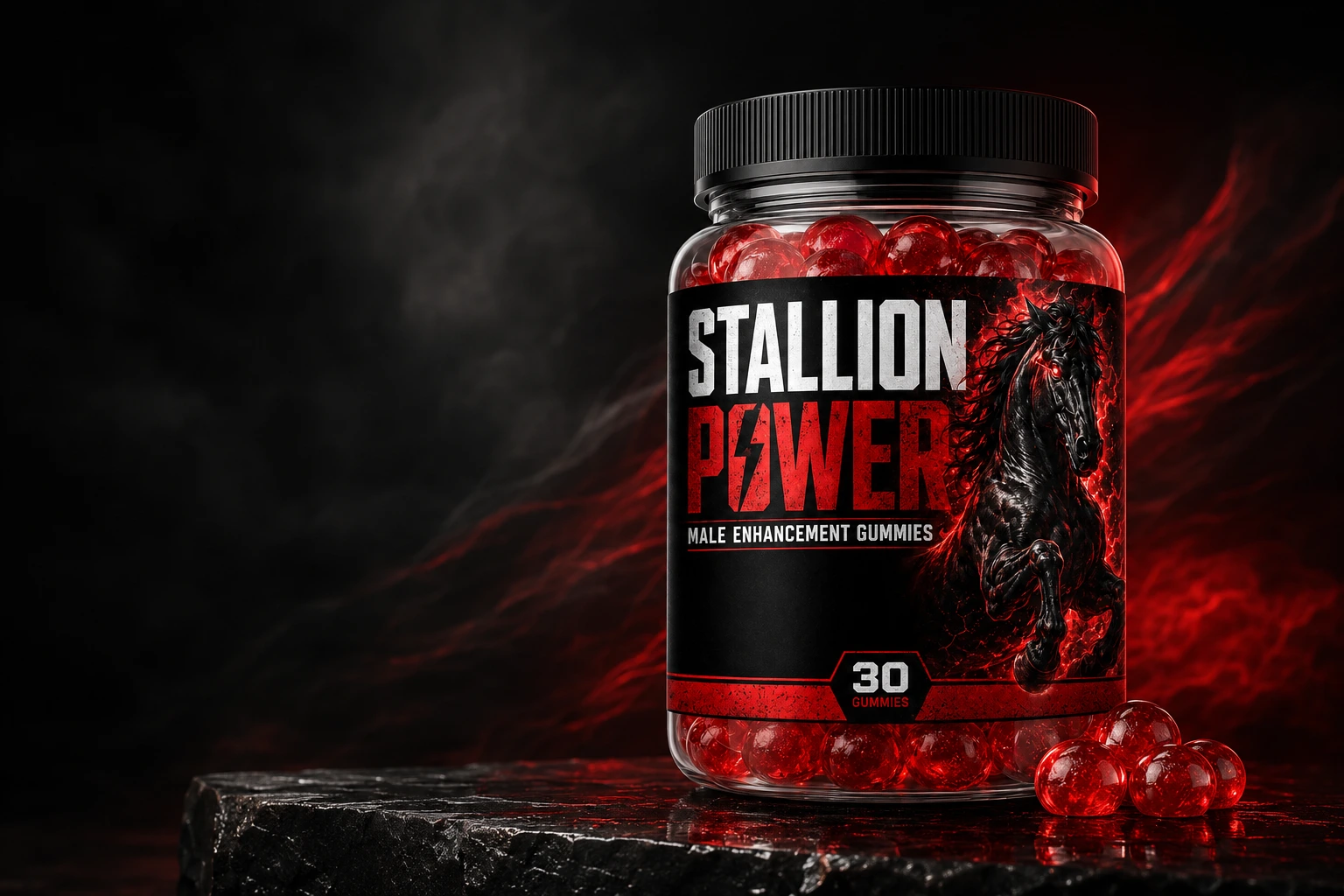
It's a fair question, and it deserves a straight answer instead of a marketing one. Stallion Power® is built around nine botanicals, and the honest truth is that the evidence behind them isn't uniform — some ingredients have real double-blind human trials behind them, and a couple are included mostly on the strength of a long traditional-use history. Here's the breakdown, tier by tier.
Tier 1: The Strongest Human Evidence
L-Arginine has the most direct clinical support in this formula. A double-blind, placebo-controlled study published in BJU International found that high-dose oral L-arginine improved reported sexual function in men with organic erectile difficulty, particularly those with lower baseline nitric oxide activity (Chen J, et al. BJU Int. 1999). The mechanism is well understood: L-arginine converts into nitric oxide, which relaxes blood vessels and supports circulation.
Ashwagandha is close behind. A randomized, double-blind, placebo-controlled trial in the American Journal of Men's Health found that ashwagandha root extract improved self-reported vitality and hormonal markers in aging, overweight men over eight weeks (Lopresti AL, Drummond PD, Smith SJ. Am J Mens Health. 2019). Its best-supported role is as a stress adaptogen, not a direct performance enhancer — a meaningfully different, but still valuable, claim.
Tier 2: Promising, But Narrower
Maca root has one of the more interesting studies in the category: a randomized trial in Andrologia found improved self-reported sexual desire in men taking Maca daily over eight weeks — with no measurable change in testosterone (Gonzales GF, et al. Andrologia. 2002). That's worth sitting with. Maca's traditional reputation leans on a "testosterone booster" framing that the clinical data doesn't actually support; whatever it's doing, it isn't through hormones.
Horny Goat Weed's active compound, icariin, has documented laboratory evidence for supporting blood flow through a PDE5-related pathway similar in class (though far weaker) to prescription options (Dell'Agli M, et al. J Nat Med. 2010). Most of that evidence, however, comes from lab and animal models rather than large human trials — a real limitation worth naming.
Tier 3: Traditional Use, Thinner Modern Research
Tribulus Terrestris is where we have to be most careful. A widely cited review in the Journal of Ethnopharmacology concluded that human clinical evidence for Tribulus's pro-sexual and androgen effects was inconsistent, even though some animal studies looked promising (Neychev VK, Mitev VI. J Ethnopharmacol. 2005). We include it for its long history and safety profile, not because the clinical case is settled.
Muira Puama and Catuaba bark sit in a similar place — centuries of traditional use in Brazilian herbal medicine, but modern clinical trials are sparse. If you're looking for a large, controlled human study on either, you won't find one we can honestly point you to.
So, Does It Work?
Here's the honest framing: Stallion Power® combines ingredients with genuinely different evidence tiers into a single daily formula, because circulation, stamina, and stress resilience are three different physiological problems that don't have one silver-bullet ingredient. The strongest-evidence pieces (L-Arginine, Ashwagandha, and to a lesser extent Maca and icariin) do the heavy lifting. The traditional botanicals round out the formula on the strength of history and safety, not a clinical guarantee.
That's why every order comes with a 60-day money-back guarantee — it's a genuinely low-risk way to find out how your own body responds, rather than taking a marketing claim at face value.